The Art of Accessorizing: Elevate Any Outfit
Master proportion, color, and texture to transform basics with belts, jewels, bags, and more—simple formulas to elevate any look with ease.
Foundations of Balance
Accessorizing is the art of composing visual harmony around your clothes, using scale, color, and texture to create a clear narrative. Start by defining a focal point. Decide whether your outfit leads with a statement necklace, bold earrings, a sculptural bag, or standout shoes. Build around that hero by adding supporting pieces with subtler presence, safeguarding overall balance and avoiding visual noise. Consider proportion: delicate chains flatter airy blouses, while structured bracelets or chunky rings can anchor relaxed knits and wide-leg trousers. Map accessories to your silhouette, echoing lines that already exist. Long pendants elongate, while short chokers highlight the collarbone. Pay attention to cohesion among elements such as hardware, finishes, and shapes, so each item speaks the same design language. Above all, think about context and personal style. The right accessories should complement your lifestyle, enhance comfort, and express your aesthetic without overshadowing the outfit itself.
Color, Contrast, and Metals
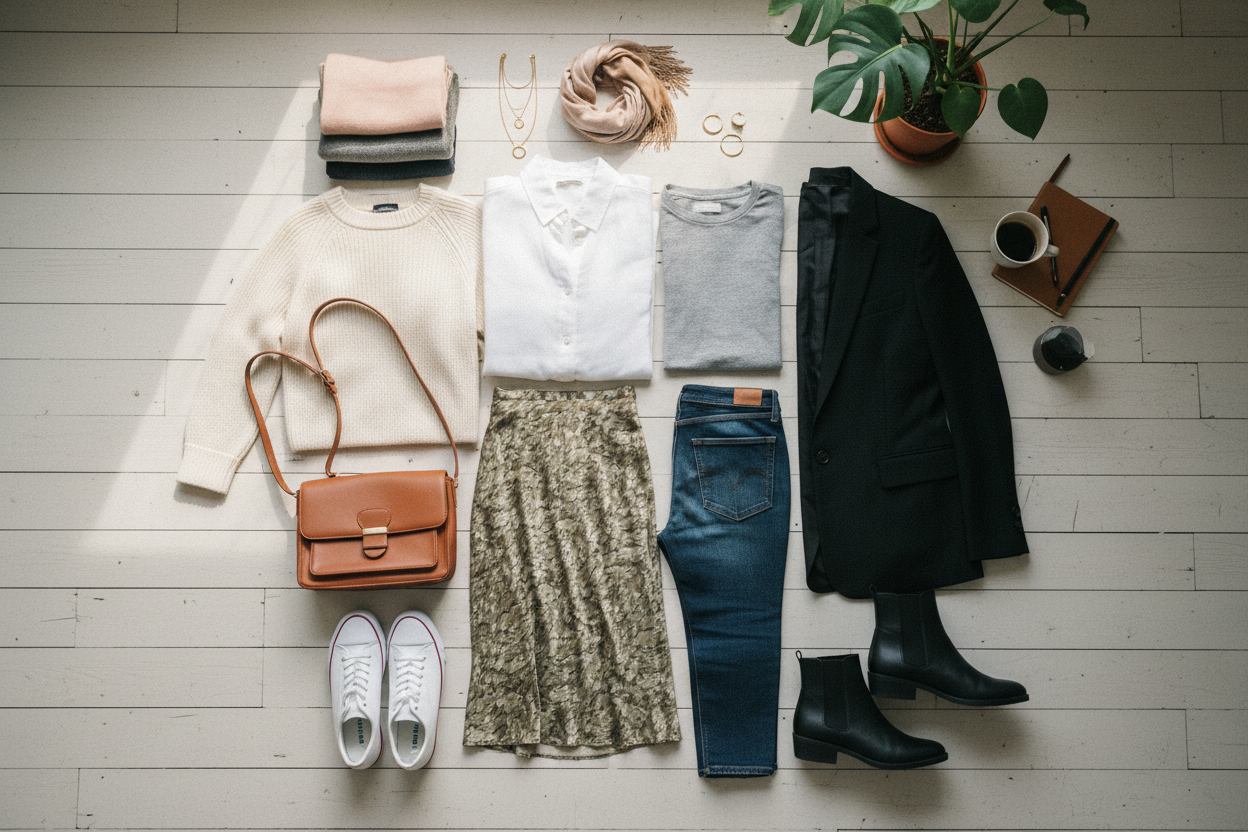
Color can transform a simple look into a refined statement. Use color harmony to guide choices: complementary accents energize neutrals, while analogous tones create softness and continuity. A bold bag or scarf can add strategic contrast, drawing the eye and sharpening the silhouette. Mind undertones. Warm complexions often glow with gold or brass, while cool undertones shine with silver, platinum, or steel. That said, mixing metals can feel modern if repeated intentionally across rings, buckles, zippers, or bag chains. Balance saturation and brightness so one element leads and others support. A vivid shoe with muted jewelry, or vibrant earrings with a neutral clutch, prevents competition. Explore materials that carry color with character, like enamel, resin, glass, and semi-precious stones, to add depth without heaviness. Remember that color also conveys mood; vibrant hues feel playful, while earth tones whisper quiet luxury. Let contrast, continuity, and undertone matching guide your choices.
Textures and Materials
Texture is a powerful styling lever, adding visual and tactile interest that photographs beautifully and feels dimensional in real life. Pair matte with glossy to bring balance: a patent bag against a wool coat, or brushed metal cuffs beside a silky blouse. Mix rough and smooth, like raffia earrings with a crisp poplin shirt, to create unexpected dialogue. Consider material character and seasonality without locking yourself to calendar rules. Woven leathers and suede offer softness, while polished metal adds clarity and structure. Balance soft fabrics with structured accessories to anchor flowy silhouettes, or add plush textures to warm up sharp tailoring. Keep an eye on finish: hammered metal, pebbled leather, and ribbed knits each add nuance. Use accessories to introduce dimension when your outfit is monochrome, and to provide calm when prints are busy. By managing surface interest, you control how light interacts with your look, elevating even the simplest base with thoughtful texture.
Statement vs Supporting
Every refined outfit benefits from editing. Choose one statement piece to act as the protagonist, then assemble a supporting cast that enhances rather than competes. A dramatic cuff or oversized hoops call for pared-back rings and necklaces. A sculptural bag pairs best with streamlined jewelry. Aim for the rule of distribution: if the drama is above the waist, keep shoes and bags quieter, and vice versa. Negative space is a design tool; let skin and fabric breathe around bold shapes to maintain clarity. Consider scale: large earrings can replace a necklace, while layered bracelets may stand in for rings. Practice curation by removing the last accessory you added and observing whether the look feels stronger. Editing sharpens intent, reinforces cohesion, and keeps the eye moving purposefully. When in doubt, pick a single hero and allow subtle accents to do the rest, ensuring the outfit tells one confident story rather than several competing ones.
Jewelry Layering Techniques
Master layering to add polish without clutter. For necklaces, vary length, weight, and texture: a fine choker, a mid-length pendant, and a longer chain create a flattering cascade. Align choices with your neckline mapping; deep V necklines welcome vertical pendants, while crew necks suit shorter stacks that hug the collarbone. With earrings, balance symmetry and interest. A statement hoop on one side can pair with a tiny stud on the other, provided the metals and shapes relate. Bracelet stacks feel best when mixing rigid and flexible forms, such as a cuff with slender bangles and a chain. For rings, distribute volume across hands and fingers, anchoring the look with one substantial band and supporting with delicate bands. Maintain visual rhythm by repeating a motif, metal, or finish throughout. The goal is intentional dimension, not density. Your layers should move with you, catch light gracefully, and underscore your natural proportions.
Belts, Bags, and Shoes
These functional accents often define the overall impression. A belt shapes the waist, bridges top and bottom, and introduces hardware that can be echoed in jewelry. Choose width based on torso length and garment structure; slim belts refine, wide belts command. With bags, prioritize scale and silhouette. Petite crossbodies suit streamlined outfits, while structured totes balance oversized layers. Let hardware continuity guide your mix of zippers, buckles, and chains for built-in cohesion. Shoes set the tone instantly. Pointed toes elongate, square shapes feel modern, and sculpted heels add architectural interest. Use color repetition to connect distant elements, like matching shoes to a subtle stripe or bag trim for repetition that reads as polished. Consider comfort as a non-negotiable. When an accessory functions beautifully, it looks better too. By aligning belts, bags, and shoes through material, metal, and proportion, you create effortless continuity across the entire look.
Signature and Care
Cultivate a personal signature so your accessories tell a consistent story. This could be a recurring metal, a shape motif, a favorite stone, or a distinctive color pop. Build a versatile capsule of pieces that mix and match seamlessly: a minimal hoop, a tailored watch, a sculptural ring, a refined belt, and a day-to-night bag. Prioritize quality where it matters most to you, and let trend-led items play supporting roles. Protect your investment with thoughtful care: store metals separately to prevent scratches, keep leather conditioned, and wipe stones after wear to maintain shine. Rotate pieces to extend longevity and keep styling fresh. Practice mindful consumption by choosing accessories that serve multiple outfits and contexts. Over time, your kit becomes a toolbox for expression, not just decoration. When your collection is intentional, well-maintained, and true to your taste, accessorizing feels intuitive, efficient, and consistently elevated.