The Ultimate Guide to Building a Capsule Wardrobe on a Budget
Build a stylish, mix-and-match capsule wardrobe without overspending. Learn smart planning, thrifty shopping, and care tips to maximize every piece.
Define Your Style and Purpose
A successful capsule wardrobe starts with clarity about your life and taste. Begin by auditing what you already own: lay out what you wear most, then identify patterns in silhouette, fabric, and color. Choose three style adjectives—perhaps relaxed, polished, and minimal—to anchor choices. Map your weekly routine into categories like work, errands, social, and active, estimating how many outfits each area truly needs. This keeps shopping grounded in reality and avoids paying for fantasy pieces. Create a focused wishlist that solves daily outfit gaps, not mood-driven cravings. Consider climate and dress codes, because versatility depends on context. Decide on a signature detail, such as rolled sleeves, clean lines, or a defined waist, so pieces coordinate intuitively. When every addition supports your core adjectives and routine, you eliminate impulse purchases, reduce decision fatigue, and build a wardrobe that feels cohesive without buying more than necessary. This foundational clarity ensures every dollar adds value.
Set a Budget and Plan Purchases
Treat your capsule like a project with a realistic budget and timeline. Start by calculating cost per wear: a well-made blazer worn fifty times can be cheaper than a bargain piece worn twice. Assign funds to priorities using a simple split—core pieces first, then shoes, then accessories—while leaving a small reserve for unexpected finds. Keep a running wishlist ranked by impact, noting the exact cut, fabric, and color you want, so you do not settle for almost-right items during shopping trips. Track spending in a note on your phone and apply a 24-hour rule before non-essential buys to curb impulse decisions. Shop slowly, planning around seasonless needs rather than fleeting trends. Consider waiting for predictable promotions without chasing every discount. When you approach purchases intentionally, you reduce duplication, avoid returns, and stretch your budget further, building momentum with each high-impact addition.
Choose a Cohesive Color Palette
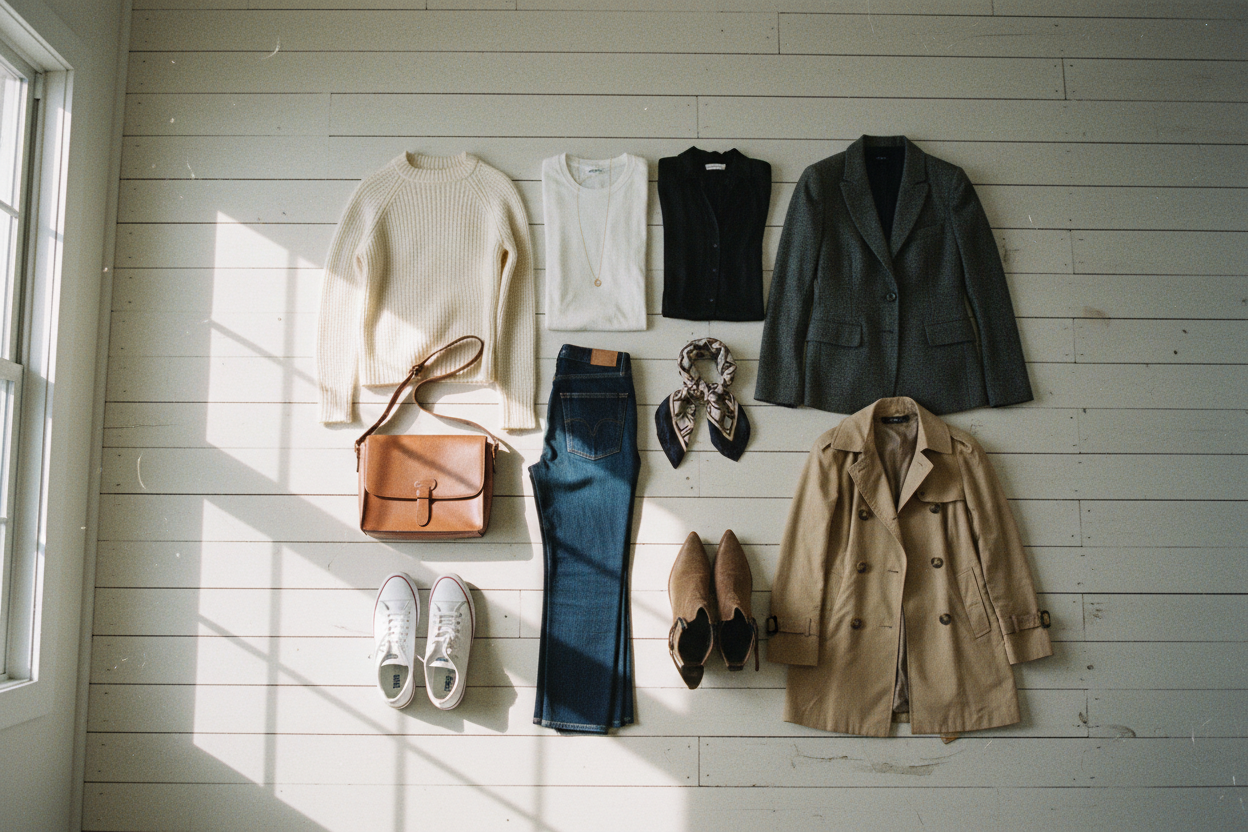
A tight color palette multiplies outfit options without multiplying items. Start with two or three neutrals—such as black, navy, tan, grey, or cream—then add one or two accent shades that flatter your undertone. Test combinations by laying items together; aim for most tops pairing with most bottoms to enable mix and match outfits. Use texture—denim, knit, twill, silk-like blends—to add interest without breaking the palette. Keep patterns simple and consistent in scale so they layer effortlessly. Choose one metal for hardware when possible to maintain a refined look, and select shoes and a bag in a neutral to anchor the wardrobe. Limiting your range reduces laundry complexity and streamlines shopping because you can ignore entire racks. Over time, refine the palette based on wear frequency: keep what harmonizes and phase out outliers. The result is a visually coherent closet where every piece earns its space.
Prioritize Versatile Core Pieces
Build around a small set of workhorse items that dress up or down. Think tailored trousers, a crisp button-up, a breathable tee, a structured blazer, a versatile dress, dark denim, and a lightweight knit. Add shoes with range—clean sneakers, loafers, and a low heel or ankle boot—to span casual to smart settings. Focus on quality over quantity: choose durable fabrics, neat stitching, and stable waistbands. Seek pieces that layer well and switch roles across contexts—trousers with tees for errands, with a blazer for meetings, or with a knit for dinner. Prioritize fit and tailoring; a modest hem or waist nip can transform an affordable find into a polished staple. Opt for fabrics that resist wrinkling and feel comfortable across temperatures. As you shop, ask if each item pairs with at least three things you already own. If it cannot do that, it probably does not belong in a lean, budget-wise capsule.
Shop Smart: Thrift, Sales, and Swaps
Stretch your budget by mixing secondhand treasures with strategic retail buys. Thrift and consignment stores offer high-quality fabrics and classic cuts at a fraction of retail; inspect seams, zippers, and linings, and check for generous seam allowances for easy tailoring. During sales, stick to your wishlist and verify return policies. Compare cost per wear rather than tag prices alone, and consider outlet or clearance areas for core basics. Host a clothing swap with friends to rehome good pieces and fill gaps for free. Use coupons and loyalty points only when they align with planned purchases. When shopping online, filter by fabric and color to avoid scrolling fatigue, then read measurements carefully to reduce returns. Bring a tape measure thrifting, test stretch recovery, and hold items to the light to assess opacity. With a disciplined eye and patience, you will uncover enduring pieces that elevate your capsule without overspending.
Maintain, Tailor, and Evolve Mindfully
The most budget-friendly strategy is making what you own last. Practice proper garment care: wash less, air items between wears, use gentle cycles, and dry flat when possible. Keep a small repair kit for buttons, loose hems, and minor snags; a fabric shaver and lint brush instantly refresh knits and coats. Schedule affordable tailoring for small tweaks that unlock perfect fit, extending lifespan and polish. Perform quarterly audits: track what you reach for, retire worn-out or redundant pieces, and update your wishlist accordingly. Use a one-in, one-out rule to protect space and maintain clarity. Store off-season items clean and folded to prevent damage. If something no longer serves you, sell or donate to fund future shopping. Finally, evolve slowly—add a fresh accent color or a new silhouette only when it complements your core palette and needs. Consistency beats volume, ensuring a capsule that feels current and cost-effective.